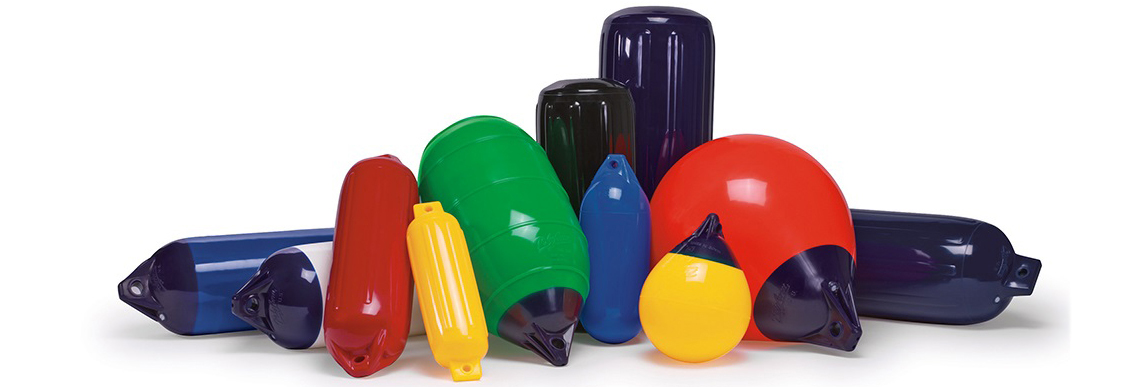
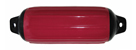
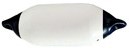
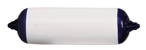
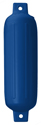
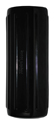
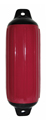
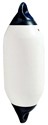
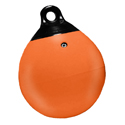
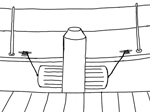
Any of the following can be used to inflate your boat fender or buoy:
Hand pump
Air compressor
Service station air pump
Remove plastic screw from the valve (located near the rope hold), and insert the pump or air compressor.
If using an air compressor, set your gauge at 2 PSI.
Fill with air until the walls are fully expanded. You should be able to easily push in the walls about 1/4 of an inch.
If no air is going in, insert a screwdriver or wire into the valve to push the flap open.
To avoid over-inflation, measure the circumference of your inflated fender or buoy and match it with the value on our Maximum Circumference Charts below.
Remove the pump and replace the plastic screw.
Instructional Videos
This step-by-step video applies to the inflation of any brand of fender or buoy.
How Many Fenders and Where to Place Them
How Many Fenders?
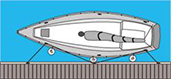
A good rule to go by is 1 fender for every 10’ of boat waterline length, but no less than 3 total.
When docking, place one fender at the beam (widest point) of your boat, and one both fore and aft. Space more fenders in between as boat length dictates.
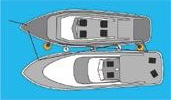
When rafting, group 3 standard fenders at the beam and one larger fender both fore and aft. Place all of the fenders on the moored or anchored boat.
Fender Placement
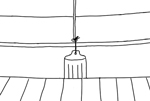
Hang your fenders from something solid like a stanchion base or deck cleat along the rail. Only tie them to lifelines as a last resort, as those are not as strong.
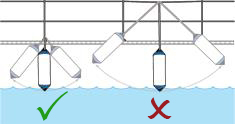
Position the fender low enough off the side of your boat so that its bottom end is an inch or two above the water.
Tie the fender line to your boat as close to the fender as possible, this helps to limit swinging.
Captain Dave with GetMyBoat shares some of his fender placement tips:
Video used with permission from GetMyBoat
Fender Alignment
Vertical: This is typically the best choice for protection against flat surfaces like walls and floating docks.
Tie the fenders with the shortest distance to the boat as possible to limit unwanted movement
Horizontal: Useful for protection against cylindrical objects like pilings, because of the wide surface area that is protected. It’s also a good idea to tie a fender horizontally at fixed (non-floating) docks.